
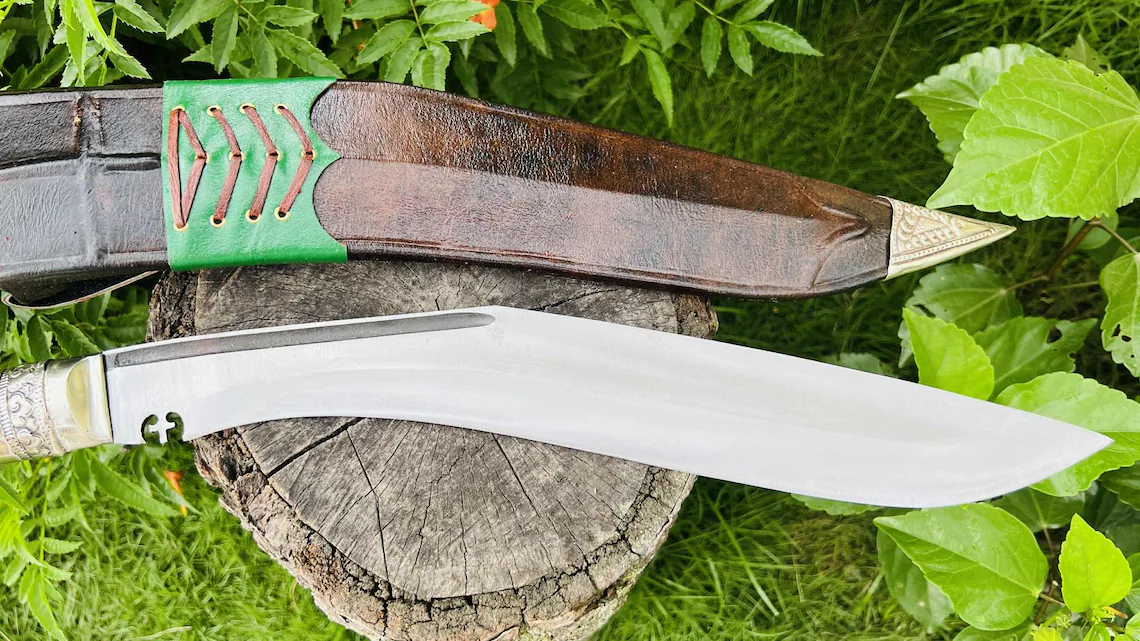
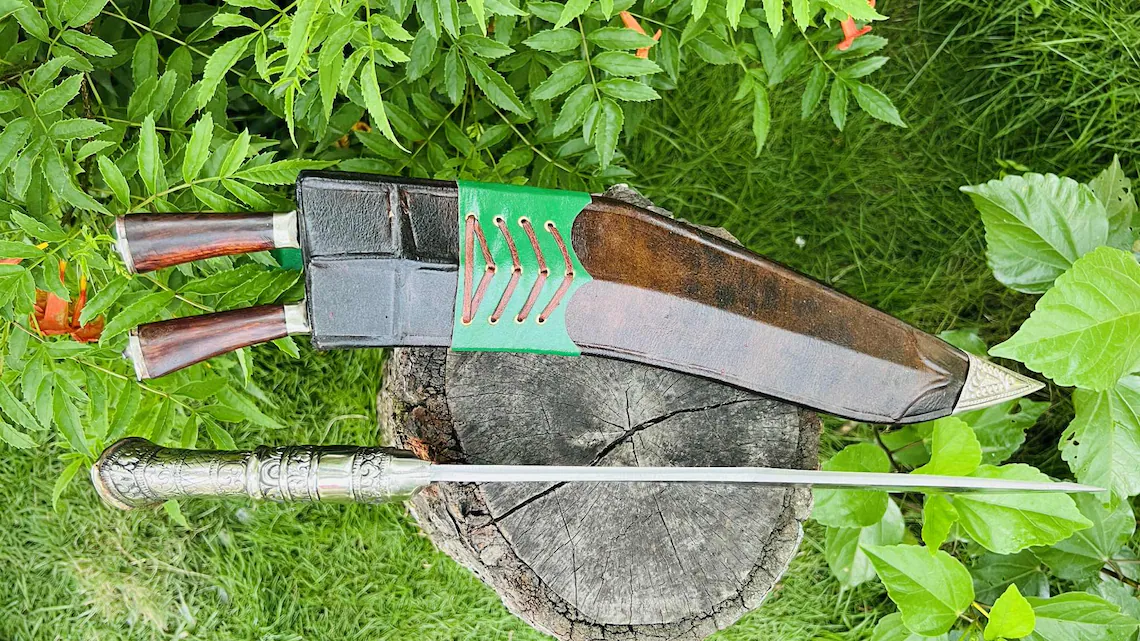
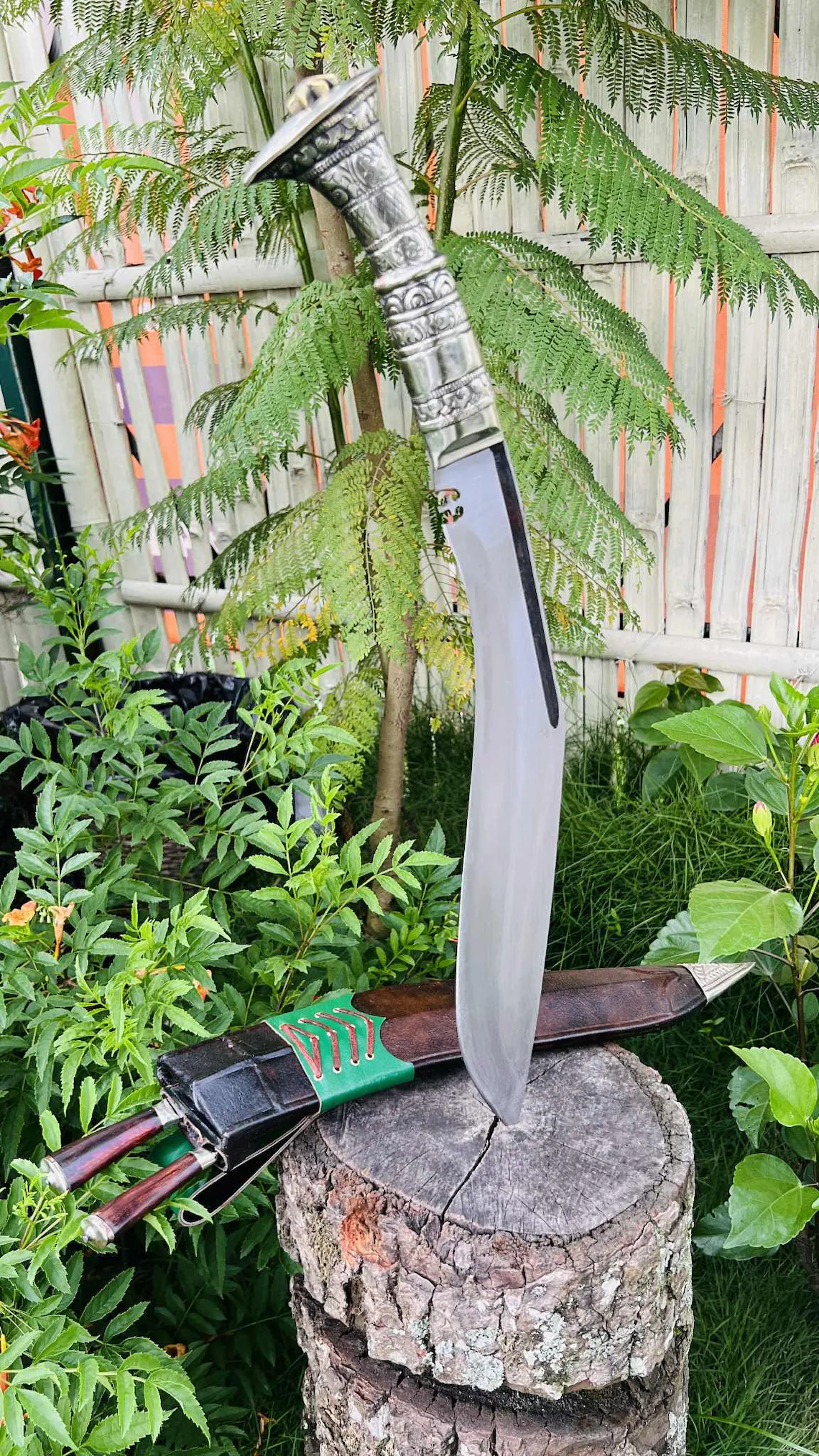
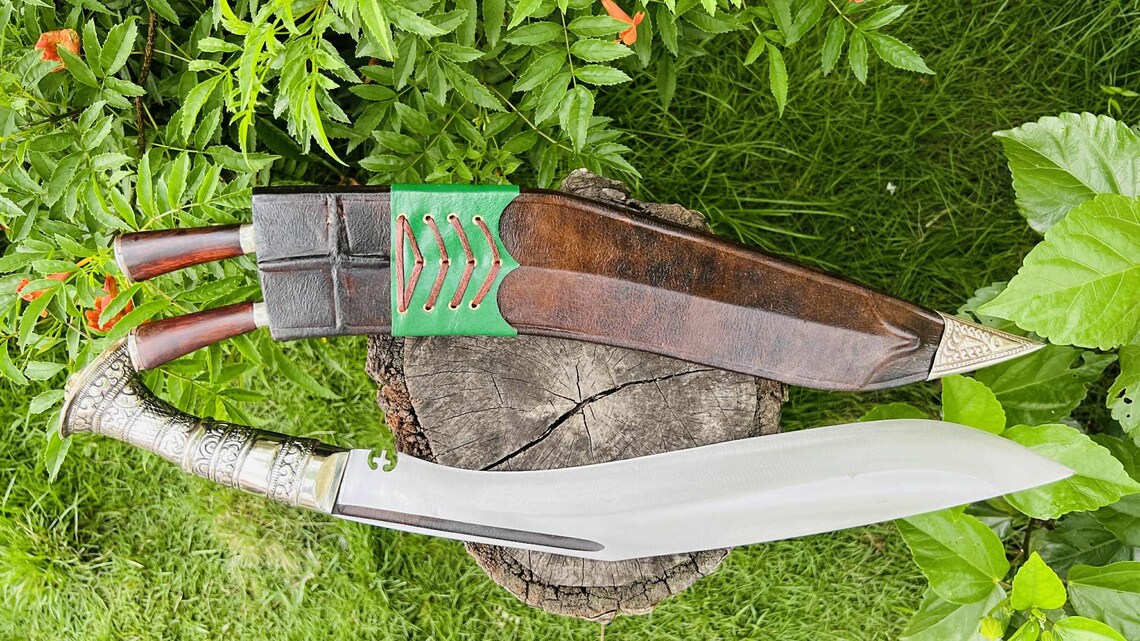
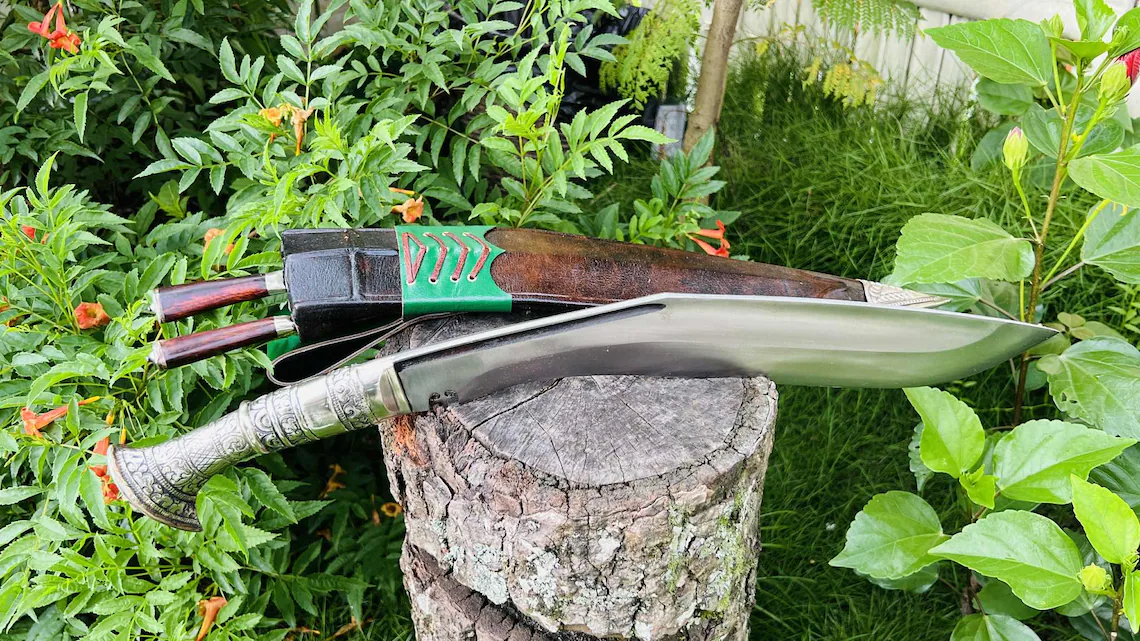
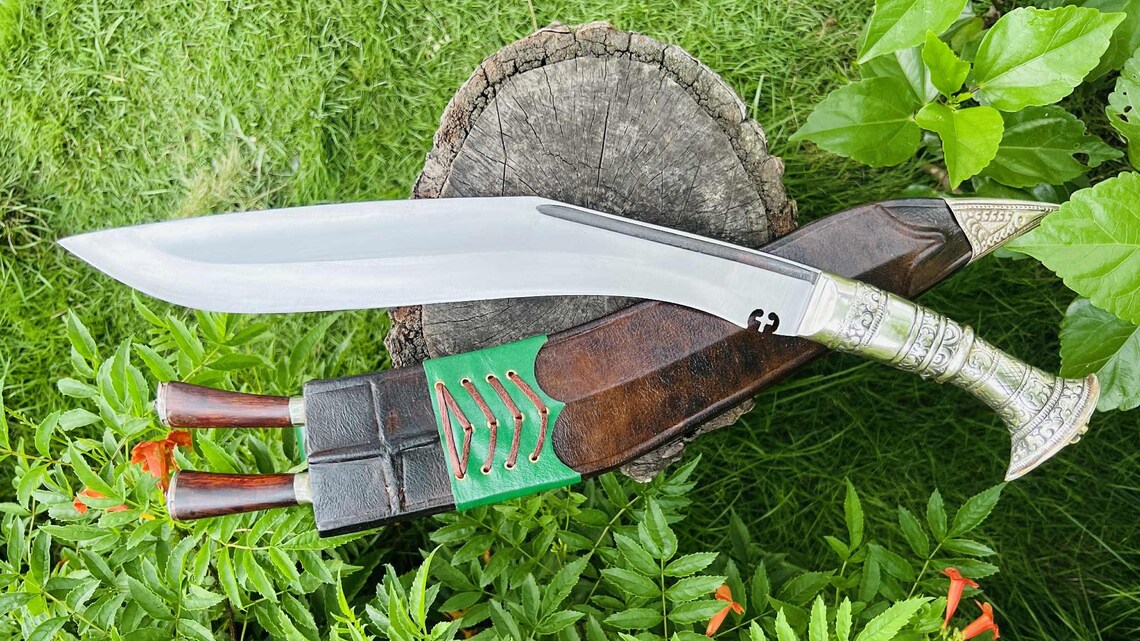
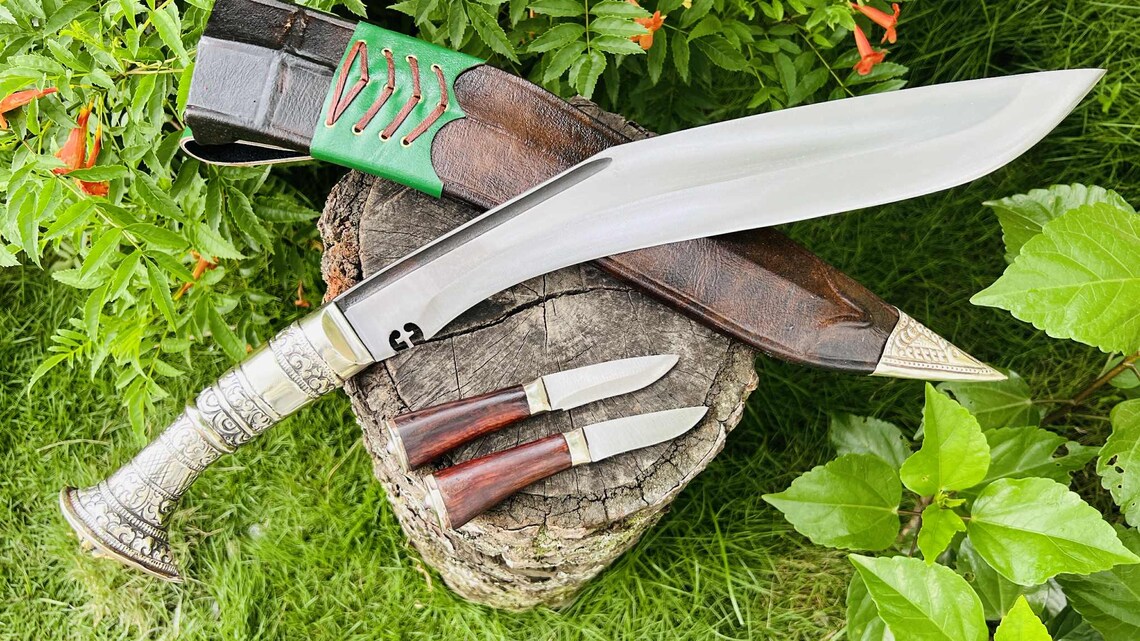
| Blade Size | 16.5" Hand Forged High Graded Carbon Steel, 5160. |
|---|---|
| Handle Size | 5.4" Tail Fixed Tang White Metal Handle. |
| Belly | 2.5 Inches. |
| Blade Material | High Graded Carbon Steel, 5160 |
| Blade Thickness | 7 MM. |
| Blade Finish Type | Jungle Finish Blade |
| Blade Weight | 840 Grams. |
| Handle Material | White Metal |
| Handle Type | Fixed Rat Tail |
| Chakmak Included ? | No |
| Hand Orientation | Right Handed |
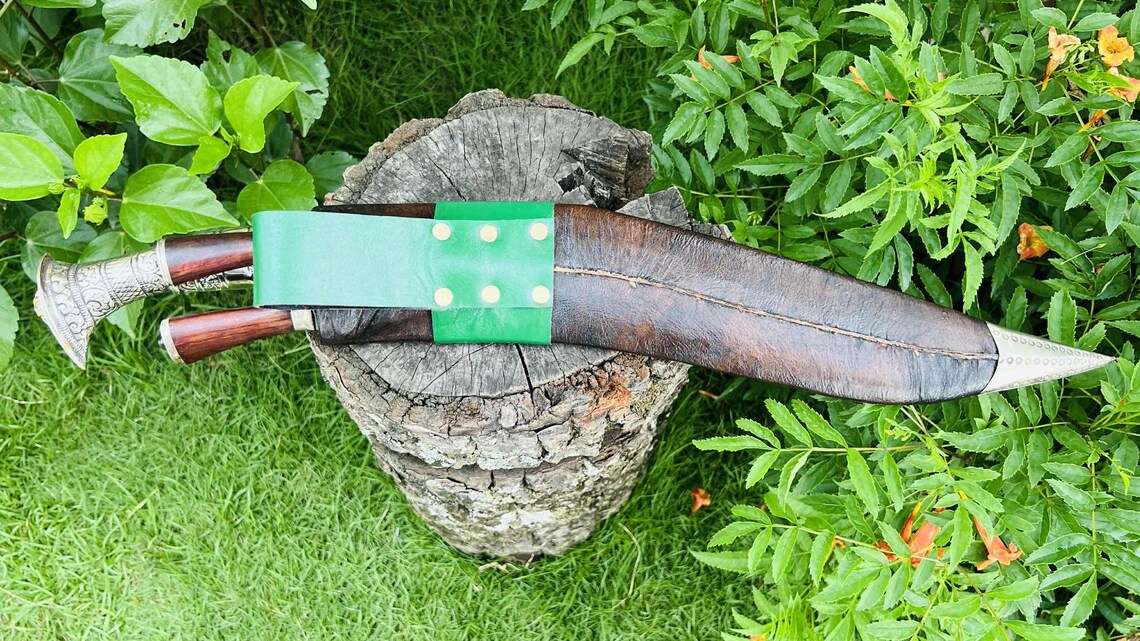
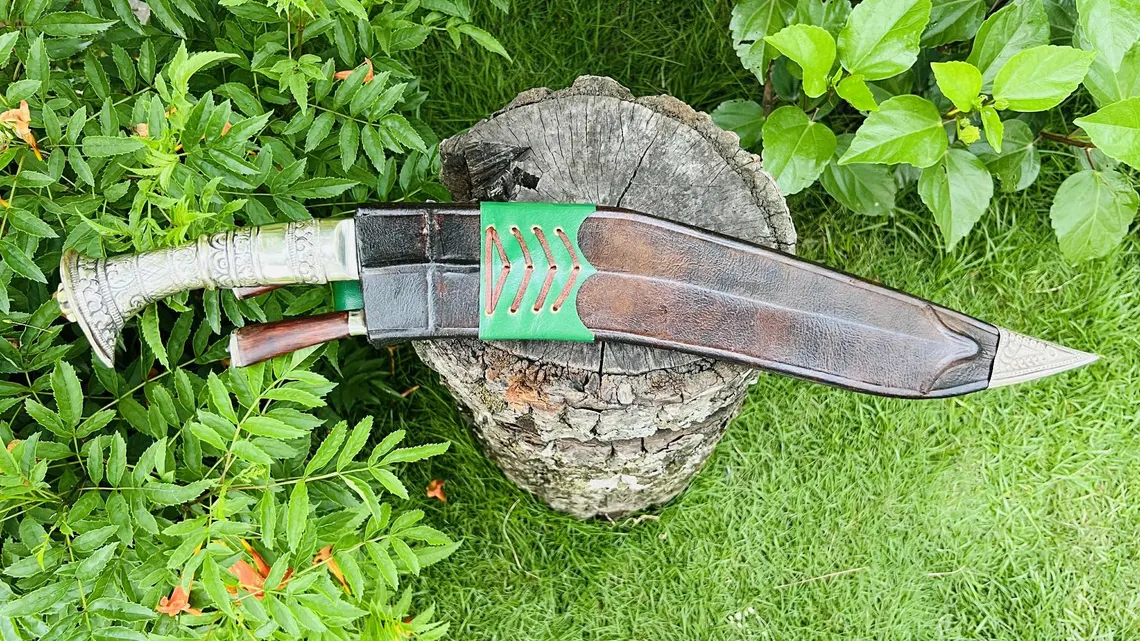
| Sheath Material | Cottonwood, Refined Leather |
| Blade Steel Hardness | Spine = 22-25 RC, Belly = 45-46 RC, Edge = 54-55 RC |
| Recommended Uses For Product | Daily needed work, Farming, Hunting, Bushcrafting, Training, Fishing, Camping, Hiking, Gift, Collection and Decoration. |
| Special Feature | Blade Style: Sirupate (slim, fast, and versatile profile). White Metal Etching Handle. |
Sale!
16.5″ Traditional Sirupate Etched White Metal Handle Kukri
Original price was: US$ 269.00.US$ 209.00Current price is: US$ 209.00.
This is a 16.5″ Traditional Sirupate Etched White Metal Handle Kukri – Hand-Forged 5160 Carbon Steel. Crafted from highly graded carbon steel, with a water-poured temper for added strength, the 16.5″ blade is versatile for both heavy-duty and light-duty tasks. Whether used in combat or for chopping wood, bone, and clearing bushes, this kukri
This is a 16.5″ Traditional Sirupate Etched White Metal Handle Kukri – Hand-Forged 5160 Carbon Steel. Crafted from highly graded carbon steel, with a water-poured temper for added strength, the 16.5″ blade is versatile for both heavy-duty and light-duty tasks. Whether used in combat or for chopping wood, bone, and clearing bushes, this kukri embodies the resilience and prowess of its users.
Use of Khukuri
The Kukri is effective as a chopping weapon, due to its weight, and slashing weapon, because the curved shape creates a “wedge” effect which causes the blade to cut effectively and deeper.
While most famed for use in the military, the kukri is the most commonly used multipurpose tool in the fields and homes in Nepal. Its use has varied from building, clearing, chopping firewood, digging, slaughtering animals for food, cutting meat and vegetables, skinning animals, and opening cans. Its use as a general farm and household tool disproves the often-stated “taboo” that the weapon cannot be sheathed “until it has drawn blood”.
The Kukri is versatile. It can function as a smaller knife by using the narrower part of the blade, closest to the handle. The heavier and wider end of the blade, towards the tip, functions as an axe or a small shovel.
Karda Chakmak
The small knife with a sharp edge is called a “kadra” or an extra knife especially used for skinning purposes or as a paper knife. Another knife accompanying kardra is the “chakmak,” or the sharpener. The traditional method of sharpening a kukri is done by using the chakmak against the edge of the blade.
Only logged in customers who have purchased this product may leave a review.
Related products
-

13″ WWI Officers Angkhola Kukri | Hand Forged Unique & Classic High Quality Kukri Knife | Handmade Khukuri
US$ 165.00 Add to cart -
Sale!
15″ Blade Hand Forged Bush Craft Throwing Spear Knife – Buy Viking Kukri Machete
Original price was: US$ 259.00.US$ 229.00Current price is: US$ 229.00. Add to cart -
Reviews
There are no reviews yet.